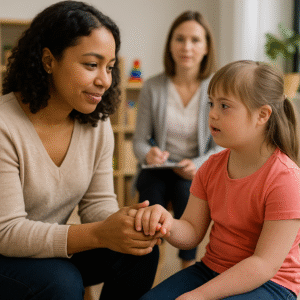
Special Needs Definition
Special needs is a term that encompasses various conditions that may influence a child’s physical, emotional, behavioral, or learning capabilities. In basic terms, it signifies that a child needs additional support in order to reach their fullest potential. Every child is different, but children with special needs typically have different challenges that typically require different interventions in the areas of education, health support, and everyday life. For instance, children with dyslexia may benefit from extra reading support, and children with autism might benefit from therapies that increase communication and social skills. Knowing this definition for special needs is the first step for parents that are just beginning the journey.
Categories of Special Needs
Special needs fit in one of several categories. Identifying these categories can assist the parent in determining facility program and resources. The main types are:
Developmental Disabilities – Such as autism spectrum disorder, Down syndrome or intellectual disabilities.
Learning Disabilities – Such as dyslexia, ADHD, and processing disorders.
Physical Disabilities – Such as cerebral palsy, muscular dystrophy and vision and hearing impairments.
Emotional and Behavioral Disorders – Such as anxiety and depression, or oppositional defiant disorder.
Chronic Medical Conditions – Such as epilepsy, diabetes and/or severe asthma.
It is important to understand that transitioning from one category to another exemplifies the range of categories of special needs, and that all children are on the continuum spectrum of special needs regardless of how similar or different they are.
Children with Special Needs
Children with special needs have specific support needs across different life areas. They may learn at a different pace, communicate uniquely, or require adapted equipment to function well in school and social venues.
The significant thing to know is that being a parent of a child with special needs does not mean their future is determined. Children can grow tremendously through patience, encouragement, and the right support. Parents are key advocates for their child’s education, health care, and social growth.
Support for Special Education
Special education supports the unique learning styles of students with special needs. Moving from a regular classroom to a special education program makes sure that every child receives an education.
Support in special education may look like:
Individualized Education Programs (IEPs) – A specific plan to address each child’s learning.
Speech and Occupational Therapy – Helping students improve their speech and daily living skills.
Assistive Technology – For example, hearing devices, or communications devices, or special educational software.
Inclusion – Students learning among their peers with the support of special education.
Parents need to engage the teachers and the school to ensure the child’s specific educational needs are met.
Parenting a Child with Special Needs
Parents of children with special needs can feel overwhelmed. But with the right perspective and tools, it can become a great experience. Some suggestions to consider include:
Educate yourself – Learn your child’s diagnosis, as well as information about specialized skills and new therapies.
Join a support group – Befriend parents of special needs children who can empathize and offer support and advice.
Celebrate small milestones – Progress may seem slow, but every little bit of progress counts.
Take care of yourself – Parents needs help, too. You will be better able to provide consistent and quality care when care for yourself.
Early Intervention for Special Needs
Early intervention includes therapies and programs designed to help children age 0 to 5, who show signs of developmental delay or disabilities. Early support for children improves the chance of better outcomes.
For example, if a child is in speech therapy at age two, they will likely have better language skills by kindergarten. In a similar vein, occupational therapy can support children to improve their motor skills at a young age.
Therefore, parents are encouraged to seek developmental screenings after they notice delays. Early intervention is often helpful to preventing more significant challenges later in life.
Developmental Disabilities Explained
Developmental disabilities are disorders that begin in childhood and often last throughout a person’s life. They include, but are not limited to, autism spectrum disorder, cerebral palsy, and intellectual disabilities.
These disabilities may not be possible to cure, but through therapy, medical care and educational support, a child’s quality of life can improve. Parents must be able to shift their thinking away from focusing on disabilities to qualities, and towards the child developing on their abilities.
Support Available for Parents of Children with Special Needs
Parents do not have to navigate this journey by themselves, and there are many resources available to support them.
Community support groups and networks of parents
Government funded programs to help financially and educationally
Nonprofit organizations like Autism Speaks and The Arc
Training and educational resources online to help them learn strategies at home
In summary, knowing the definition of special needs, the types of special needs identified and what supports are available, enables parents to facilitate their child as needed. Supporting children transition from one stage to the next, such as from early intervention services to special education services, means children will receive appropriate support along the way.
With the right perspective and love, and with the use of resources, parents can help turn challenges into opportunities for the child and facilitate the child toward reaching a satisfying life.